Search This Blog

Sunday, May 3, 2015

Are Web Apps The Future?

Are Web Apps The Future?


Web Apps Post BG


There has been a lot of discussion on native vs hybrid app but what is really the future of apps. I think web app is the future.


Probably some of the giants like Microsoft already understand that and know that the platform independence of web browser will be significant in the future. Project spartan and integrated approach for hardware and software is more prominent now in Microsoft strategy as well. Windows 10 will be unifying various devices in terms of OS.


With HTML 5, jquery, angularJS, the gap in native and hybrid app is minimal so really is the specialized knowledge of the phone platform necessary? Not only that it also requires licensing cost etc.


What are the problems


  • Not every app is on every platform

  • Apps are quite large in size

  • Apps require frequent updates so frequent downloads

  • Apps take the device ROM space

Native apps are essentially solving the problem that they are on the device and available offline. While this may be true but most if not all apps require internet for content or some functions.


Web apps don’t need any market, they are essentially a URL and downloading them is just saving them as your favorite or bookmark.


The Good


  • Easy to update

  • Takes no space

  • One version with some tweaks can support all platforms

  • SOA architecture and cloud support enables high scalability


The Bad


  • Rendering of native vs web is different – true but with hybrid approach using HTML5, CSS3 and JavaScript libraries, the gap is closing

  • Offline performance is challenging, however using offline-first architecture can help

  • Local caching and data availability- is limited in web, however approach using pouchDB as one example that can alleviate the issue


The Ugly


  • No easy solution for notifications  and background tasks

  • While Google chrome has added capability for notifications in the browser as first step, essentially others may support it soon

  • Likely Microsoft Spartan will include notification that will be on browser and may integrate well with windows 10 notifications

  • Web apps have still a lot of ground to make when compared to native apps but there are tools available now to close the gap


Look at the following tools / libraries that can help


  • Hoodie - provides for offline first architecture (http://hood.ie/)

  • Offline.js – to sync up while u were offline (http://github.hubspot.com/offline/docs/welcome/)

  • Tero – for offline storage (https://github.com/treojs/treo)

  • Famo – for building native like UI (http://famo.us/)

  • Intel XDK – HTML5 based framework for developing apps (https://software.intel.com/en-us/html5/tools)

 
References: With help from various sites on the internet, was looking at it for sometime thought it will be great to share


Are Web Apps The Future?

Sunday, March 1, 2015

Thursday, February 5, 2015

Election prediction Delhi 2015

image


AAP is led by a Bagora – ran away from Govt job; IAC and CM of Delhi. He was so over whelmed by his sucess in last Assembly elections that he started looking himself as PM of India. He is a liar and believes in the policy of shoot and scoot. AAP is always in self certification mode.


Prediction:

BJP 37 – 39

AAP 26 – 28

Congress + others 5 – 7


Election prediction Delhi 2015

Friday, December 19, 2014

Wednesday, December 3, 2014

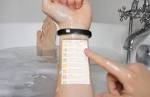
Future of smartphones - phone on your skin - see the working prototype

This is amazing. Smartphones will be all virtual, water proof and probably no weight.


This is is a working prototype. Take a look at this android prototype from Cicret


image


http://www.youtube.com/watch?v=39LVZ3nkZ7k


Future of smartphones - phone on your skin - see the working prototype

Thursday, November 27, 2014

Most Bizarre Laws-in U.S.A.


In her “I Fought The Law” series, Olivia Locher has come up with a series of images that creatively poke fun at some of the more absurd laws in effect in the United States. Each photo is a tongue-in-cheek rebellion that intentionally violates some absurd U.S. State law, most of which are outdated or bizarrely specific.

Some of these laws are simply outdated historical laws, while other are total headscratchers. It’s hard to imagine why riding bikes in swimming pools is illegal in California or why wine can’t be served in teacups in Kansas. And it begs the questions – was people working out while driving such a big problem in Oregon that they had to outlaw it? Other laws, while weird, have historical context and are simply outdated. It’s illegal to carry an ice-cream cone in your back pocket in Alabama because this was an ingenious way for horse thieves to steal horses. They could lead away horses with the ice-cream without ever having to lay hands on them, thereby not technically stealing the horses until they were “lost.”


In Alabama, it is illegal to have an ice cream cone in your back pocket at all times.


In California, nobody is allowed to ride a bicycle in a swimming pool.


In Maine it’s unlawful to tickle women under the chin with a feather duster.


In Utah, no one may walk down the street carrying a paper bag containing a violin.


In Delaware, it’s illegal to wear pants that are “form-fitting”around the waist.


In Tennessee, hollow logs may not be sold.


In Wisconsin, it is illegal to serve apple pie in public restaurants without cheese.


In Texas, it is illegal for children to have unusual haircuts.


In Hawaii, coins are not allowed to be placed in ones ears.


In Oregon, one may not test their physical endurance while driving a car on the highway.


In Kansas, it’s illegal to serve wine in teacups.


Most Bizarre Laws-in U.S.A.

Tuesday, November 25, 2014

Ageing of Body Parts

Read and Learn

How the body ages some interesting information


************

BRAIN – Starts ageing at 20

As we get older, the number of nerve cells or neurons in the brain,

decrease.

We start with around 100 billion, but in our 20s this number starts to

decline.

By 40, we could be losing up to 10,000 per day, affecting memory,

co-ordination and brain function.


************

FERTILITY – Starts ageing at 35

Female fertility begins to decline after 35, as the number and quality of

eggs in the ovaries start to fall. The lining of the womb may become

thinner, making it less likely for a fertilized egg to take, and also

creating an environment hostile to sperm.


************

HAIR – Starts ageing at 30

Male hair loss usually begins in the 30s. Hair is made in tiny pouches just

under the skin’s surface, known as follicles. A hair normally grows from

each follicle for about three years, is then shed, and a new hair grows.

Most people will have some grey hair by the age of 35. When we are young,

our hair is colored by the pigments produced by cells in the hair follicle

known as melanocytes.


************

GUT – Starts ageing at 55.

A healthy gut has a good balance between harmful and ‘friendly’ bacteria.

But levels of friendly bacteria in the gut drop significantly after 55,

particularly in the large intestine.

As a result, we suffer from poor digestion and an increased risk of gut

disease.

Constipation is more likely as we age, as the flow of digestive juices from

the stomach, liver, pancreas and small intestine slows down.


************

BREASTS – Start ageing at 35

By their mid-30s, women’s breasts start losing tissue and fat, reducing

size and fullness.

Sagging starts properly at 40 and the areola (the area surrounding the

nipple) can shrink considerably.


************

BLADDER – Starts ageing at 65

Loss of bladder control is more likely when you hit 65. Women are more

vulnerable to bladder problems as, after the menopause, declining estrogen

levels make tissues in the urethra — the tube through which urine passes

— thinner and weaker, reducing bladder support.

Bladder capacity in an older adult is generally half that of a younger

person — about two cups in a 30-year-old and one cup in a 70-year-old.


************

LUNGS – Start ageing at 20

Lung capacity slowly starts to decrease from the age of 20.

By the age of 40, some people are already experiencing breathlessness.

This is partly because the muscles and the rib cage which control breathing

stiffen up.


************

VOICE – Starts ageing at 65

Our voices become quieter and hoarser with age. The soft tissues in the

voice box (larynx) weaken, affecting the pitch, loudness and quality of the

voice.

A woman’s voice may become huskier and lower in pitch, whereas a man’s

might become thinner and higher.


************

EYES – Start ageing at 40

Glasses are the norm for many over-40s as failing eyesight kicks in —

usually long-sightedness, affecting our ability to see objects up close.


************

HEART – Starts ageing at 40

The heart pumps blood less effectively around the body as we get older.

This is because blood vessels become less elastic, while arteries can

harden or become blocked because of fatty deposits forming on the coronary

arteries — caused by eating too much saturated fat.

The blood supply to the heart is then reduced, resulting in painful angina.

Men over 45 and women over 55 are at greater risk of a heart attack.


************

LIVER – Starts ageing at 70

This is the only organ in the body which seems to defy the aging process.


************

KIDNEYS – Starts ageing at 50

With kidneys, the number of filtering units (nephrons) that remove waste

from the bloodstream starts to reduce in middle age.


************

PROSTATE – Starts ageing at 50

The prostate often becomes enlarged with age, leading to problems such as

increased need to urinate. This is known as benign prostatic hyperplasia

and affects half of men over 50, but rarely those under 40. It occurs when

the prostate absorbs large amounts of the male sex hormone testosterone,

which increases the growth of cells in the prostate. A normal prostate is

the size of a walnut, but the condition can increase this to the size of a

tangerine.


************

BONES – Start ageing at 35

‘Throughout our life, old bones are broken down by cells called osteoclasts

and replaced by bone-building cells called osteoblasts — a process called

礎one turnover’. Children’s bone growth is rapid – the skeleton takes just

two years to renew itself completely. In adults, this can take 10 years.

Until our mid-20s, bone density is still increasing. But at 35, bone loss

begins as part of the natural ageing process.


************

TEETH – Start ageing at 40

As we age, we produce less saliva, which washes away bacteria, so teeth and

gums are more vulnerable to decay. Receding gums – when tissue is lost from

gums around the teeth – is common in adults over 40.


************

MUSCLES – Start ageing at 30

Muscle is constantly being built up and broken down, a process which is

well balanced in young adults. However, by the time we’re 30, breakdown is

greater than buildup, explains Professor Robert Moots. Once adults reach

40, they start to lose between 0.5 and 2 per cent of their muscle each

year. Regular exercise can help prevent this.


************

HEARING – Starts ageing mid-50s

More than half of people over 60 lose hearing because of their age,

according to the Royal National Institute for the Deaf.


************

SKIN – Starts ageing mid-20s

The skin starts to age naturally in your mid-20s.


************

TASTE AND SMELL – Start ageing at 60

We start out in life with about 10,000 taste buds scattered on the tongue.


This number can halve later in life. After we turn 60, taste and smell

gradually decline, partly as a result of the normal ageing process.


************


Ageing of Body Parts