Here is a close view of Singapore MRT
cool angle.
http://youtu.be/I3eMGMZaR-0
Look at Singapore MRT up close Enjoy!!
Here is a close view of Singapore MRT
cool angle.
http://youtu.be/I3eMGMZaR-0
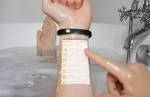
This is amazing. Smartphones will be all virtual, water proof and probably no weight.
This is is a working prototype. Take a look at this android prototype from Cicret
http://www.youtube.com/watch?v=39LVZ3nkZ7k
In her “I Fought The Law” series, Olivia Locher has come up with a series of images that creatively poke fun at some of the more absurd laws in effect in the United States. Each photo is a tongue-in-cheek rebellion that intentionally violates some absurd U.S. State law, most of which are outdated or bizarrely specific.
Some of these laws are simply outdated historical laws, while other are total headscratchers. It’s hard to imagine why riding bikes in swimming pools is illegal in California or why wine can’t be served in teacups in Kansas. And it begs the questions – was people working out while driving such a big problem in Oregon that they had to outlaw it? Other laws, while weird, have historical context and are simply outdated. It’s illegal to carry an ice-cream cone in your back pocket in Alabama because this was an ingenious way for horse thieves to steal horses. They could lead away horses with the ice-cream without ever having to lay hands on them, thereby not technically stealing the horses until they were “lost.”
Bad or painful knees are one of the most common causes of pain in the elderly, and can start at quite an early age due to extra stress on the cartilage or due to injury. This damage is rarely healed by the body. |
Mothers are the sweetest gift from God to us. There is no way we can ever really thank our mother for all that she does for us. Nevertheless, we must make it a habit to keep reminding ourselves of the various sacrifices she made while raising us.
She was there for us. Let us also be there for her.
Ever since I started using Hydrogen Peroxide to get rid of armpit stains, to clean cookie sheets, as a miracle cleaner in my kitchen and bathroom, and to make my own “oxi clean”…I ALWAYS have at least one bottle of the stuff under my kitchen sink, under my bathroom sink, AND in the laundry room. This stuff is amazingly versatile!
But it wasn’t until recently, after doing some IN DEPTH research on the subject, that I came to realize what a “miracle substance” hydrogenperoxide really is! It’s safe, it’s readily available, it’s cheap, and best of all, it WORKS! It works for a LOT of stuff!
Hydrogen peroxide should really be called oxygen water, since it is basically the same chemical make up as water but with an extra oxygen atom (H2O2). Because of this it breaks down quickly and harmlessly into oxygen and water.
Some other interesting facts about hydrogen peroxide:
It is found in all living material.
Your white blood cells naturally produce hydrogen peroxide (H2O2) to fight bacteria and infections.
Fruit and vegetables naturally produce hydrogen peroxide. This is one of the reasons why it is so healthy to eat fresh fruit and vegetables.
It is found in massive dosages in the mother’s first milk, called colostrum, and is transferred to the baby to boost their immune system.
It is found in rain water because some of the H20 in the atmosphere receives an additional oxygen atom from the ozone (O3) and this H2O2 makes plants grow faster.
Next to Apple Cider Vinegar, hydrogen peroxide ranks up there as one of the best household remedies.
Besides the obvious (cleansing wounds), did you know that it is probably the best remedy to dissolve ear wax? Brighten dingy floors? Add natural highlights to your hair? Improve your plants root systems? The list goes on and on!
There are SO many uses for this stuff that I’ve started replacing the cap on the hydrogen peroxidebottle with a sprayer because it’s easier and faster to use that way.
I have compiled a rather impressive list of uses for 3% hydrogen peroxide that I hope will have you as thrilled and bewildered as I was!
Wash vegetables and fruits with hydrogen peroxide to remove dirt and pesticides. Add 1/4 cup of H2O2 to a sink of cold water. After washing, rinse thoroughly with cool water.
In the dishwasher, add 2 oz. to your regular detergent for a sanitizing boost. Also, beef up your regular dish soap by adding roughly 2 ounces of 3% H2O2 to the bottle.
Use hydrogen peroxide as a mouthwash to freshen breath. It kills the bacteria that causes halitosis. Use a 50/50 mixture of hydrogen peroxide and water.
Use baking soda and hydrogen peroxide to make a paste for brushing teeth. Helps with early stages of gingivitis as it kills bacteria. Mixed with salt and baking soda, hydrogen peroxide works as a whitening toothpaste.
Soak your toothbrush in hydrogen peroxide between uses to keep it clean and prevent the transfer of germs. This is particularly helpful when you or someone in your family has a cold or the flu.
Clean your cutting board and countertop. Let everything bubble for a few minutes, then scrub and rinse clean. (I’ve been using it for this a LOT lately!)
Wipe out your refrigerator and dishwasher. Because it’s non-toxic, it’s great for cleaning places that store food and dishes.
Clean your sponges. Soak them for 10 minutes in a 50/50 mixture of hydrogen peroxide and warm water in a shallow dish. Rinse the sponges thoroughly afterward.
Remove baked-on crud from pots and pans. Combine hydrogen peroxide with enough baking soda to make a paste, then rub onto the dirty pan and let it sit for a while. Come back later with a scrubby sponge and some warm water, and the baked-on stains will lift right off.
Whiten bathtub grout. First dry the tub thoroughly, then spray it liberally with hydrogen peroxide. Let it sit — it may bubble slightly — for a little while, then come back and scrub the grout with an old toothbrush. You may have to repeat the process a few times.
Clean the toilet bowl. Pour half a cup of hydrogen peroxide into the toilet bowl, let stand for 20 minutes, then scrub clean.
Remove stains from clothing, curtains, and tablecloths. Hydrogen peroxide can be used as a pre-treater for stains — just soak the stain for a little while in 3% hydrogen peroxide before tossing into the laundry. You can also add a cup of peroxide to a regular load of whites to boost brightness. It’s a green alternative to bleach, and works just as well.
Brighten dingy floors. Combine half a cup of hydrogen peroxide with one gallon of hot water, then go to town on your flooring. Because it’s so mild, it’s safe for any floor type, and there’s no need to rinse.
Clean kids’ toys and play areas. Hydrogen peroxide is a safe cleaner to use around kids, or anyone with respiratory problems, because it’s not a lung irritant. Spray toys, toy boxes, doorknobs, and anything else your kids touch on a regular basis.
Help out your plants. To ward off fungus, add a little hydrogen peroxide to your spray bottle the next time you’re spritzing plants.
Add natural highlights to your hair. Dilute the hydrogen peroxide so the solution is 50% peroxide and 50% water. Spray the solution on wet hair to create subtle, natural highlights.
According to alternative therapy practitioners, adding half a bottle of hydrogen peroxide to a warm bath can help detoxify the body. Some are skeptical of this claim, but a bath is always a nice way to relax and the addition of hydrogen peroxide will leave you – and the tub – squeaky clean!
Spray a solution of 1/2 cup water and 1 tablespoon of hydrogen peroxide on leftover salad, drain, cover and refrigerate. This will prevent wilting and better preserve your salad.
Sanitize your kids’ lunch boxes/bags.
Dab hydrogen peroxide on pimples or acne to help clear skin.
Hydrogen peroxide helps to sprout seeds for new plantings. Use a 3% hydrogen peroxide solution once a day and spritz the seed every time you re-moisten. You can also use a mixture of 1 parthydrogen peroxide to 32 parts water to improve your plants’ root system.
Remove yellowing from lace curtains or tablecloths. Fill a sink with cold water and a 2 cups of 3%hydrogen peroxide. Soak for at least an hour, rinse in cold water and air dry.
Use it to remove ear wax. Use a solution of 3% with olive or almond oil. Add a couple drops of oil first then H2O2. After a few minutes, tilt head to remove solution and wax.
Helps with foot fungus. Spray a 50/50 mixture of hydrogen peroxide and water on them (especially the toes) every night and let dry. Or try soaking your feet in a peroxide solution to help soften calluses and corns, and disinfect minor cuts.
Spray down the shower with hydrogen peroxide to kill bacteria and viruses.
Use 1 pint of 3% hydrogen peroxide to a gallon of water to clean humidifiers and steamers.
Wash shower curtains with hydrogen peroxide to remove mildew and soap scum. Place curtains in machine with a bath towel and your regular detergent. Add 1 cup full strength 3% hydrogen peroxideto the rinse cycle.
Use for towels that have become musty smelling. 1/2 cup Peroxide and 1/2 cup vinegar let stand for 15 minutes wash as normal. Gets rid of the smell.
Use hydrogen peroxide to control fungi present in aquariums. Don’t worry, it won’t hurt your fish. Use sparingly for this purpose.
De-skunking solution. Combine 1 quart 3% H2O2, 1/4 cup baking soda, 1 teaspoon Dawn dish detergent, 2 quarts warm water.
Tasmin sati svasaprasvasayor-gativicchedah pranayamah—“Regulation of breath or the control of Prana is the stoppage of inhalation and exhalation, which follows after securing that steadiness of posture or seat.”
This is the definition of Pranayama in the Yoga-sutras of Patanjali.
‘Svasa’ means inspiratory breath. ‘Prasvasa’ means expiatory breath. You can take up the practice of Pranayama after you have gained steadiness in your Asana (seat). If you can sit for 3 hour in one Asana, continuously at one stretch, you have gained mastery over the Asana. If you are able to sit from half to one hour even, you can take up the practice of Pranayama. You can hardly make any spiritual progress without the practice of Pranayama.
Prana is Vyashti, when the individual is concerned. The sum total of the cosmic energy or cosmic Prana is Hiranyagarbha who is known as the floating ‘Golden-Egg’. Hiranyagarbha is Samashti Prana. One match stick is Vyashti (single). The whole match box is Samashti. A single mango-tree is Vyashti. The whole mango grove is Samashti. The energy in the body is Prana. By controlling the motion of the lungs or respiratory organs, we can control the Prana that is vibrating inside. By control of Prana, the mind can be easily controlled, because the mind is fastened to the Prana, like the bird to the string. Just as the bird that is tied to a post by a string, after flying here and there, finds its resting place in the post, so also this mind-bird after running hither and thither, in various sensual objects, finds its resting place during deep sleep in the Prana.
Pranayama (According to the Gita)
Apane juhvati pranam pranepanam tathapare; Pranapanagatee ruddhva pranayamaparayanah (Gita, Ch. IV-29.). Others offer Prana (outgoing breath) in Apana (incoming breath) and Apana in Prana, restraining the passage of Prana and Apana, absorbed in Pranayama.Pranayama is a precious yajna (sacrifice). Some practice the kind of Pranayama called Puraka (filling in). Some practice the kind of Pranayama called Rechaka (emptying). Some are engaged in the practice of Pranayama called Kumbhaka, by impeding the outward passage of air, through the nostrils and the mouth, and by impeding the inward passage of the air, in the opposite direction.
Pranayama (According To Sri Sankaracharya)
“Pranayama is the control of all life-forces by realising naught but Brahman in all things as the mind, etc.
“The negation of the Universe is the outgoing breath. The thought: ‘I am Brahman’ itself is called the incoming breath.
The permanence of that thought thereafter is the restrained breath. This is the Pranayama of the wise, while the pressing of the nose is only for the unknowing.” (Aparokshanubhuti, 118-120). Pranayama(According to Yogi Bhusunda)
Bhusunda says to Sri Vasishtha: “In the cool lotus of the heart within this visible tenement of flesh composed of the five elements, there are two Vayus, viz., Prana and Apana, commingled in it. For those who tread smoothly and without any or the slightest efforts, the path of these two Vayus, will become the sun and the moon themselves in the heart—Akasa, and will rove in the Akasa and yet be animating and carrying their fleshy-tabernacle. These Vayus will go up and down to higher and lower states. They are of the same nature in the waking, dreaming and dreamless sleeping state, and permeate all throughout. I am moving in the direction of those two Vayus and have rendered nil all my Vasanas in the waking state lit unto those of the dreamless sleeping state. Divide a filament of the lotus-stalk into a thousand times and you will find these Vayus more subtle than that. Hence it is difficult for me to treat about the nature of these Vayus and their vibrations. Of these, Prana does ceaselessly vibrate in this body, with an upward motion, both externally and internally, while Apana having the same fluctuating tendency, vibrates both external and internal to the body having a downward motion. It will be beneficial if the Prana exhaled to the extent of 16 digits, is inhaled to the same extent. Only 12 digits are inhaled ordinarily. Those who have brought to experience—viz., the equalisation of Prana in exhalation and inhalation will enjoy infinite bliss. “Now hear about the characteristics of Prana. The inhalation to the length of 12 digits of the Prana which has been exhaled, is called (the internal) Puraka (inhalation). This also is called the internal (Puraka), when Apana Vayu re-enters the body from outside without any effort. When Apana Vayu ceases to manifest itself and Prana gets absorbed in the heart, then the time occupied in such a state is (internal) Kumbha. Yogins are able to experience all these. When the Prana in the Akasa of the heart manifests itself externally (to the heart within) in diverse aspects without any affliction to the mind then it is called (the external) Rechaka (exhalation). When the externally fluctuating Prana enters the nose and stops there at its tip, then it is called the external Puraka. But when it is passing from the tip of the nose it goes down 12 digits. Then also it is called the external Puraka. When Prana goes arrested without and Apana within, then it is called the external Kumbhaka. When the shining Apana Vayu takes an upward bent within, then it is styled the external Rechaka. All these practices lead to moksha. Therefore they should ever be meditated upon. Those who have understood and practiced well all the external and internal Kumbhakas and others, will never be reborn.
“All the eight courses, I have given out before, are capable of yielding Moksha. They should be practised both day and night. Those who are associated with these practices smoothly and control their minds by not letting them run in other directions, will in course of time attain Nirvana. Such practitioners will never thirst after material pleasures. They will ever be in their uniform practice, whether walking, standing, waking, dreaming or sleeping.
“Prana, having flown out, will again be absorbed in the heart having run back 12 digits. Similarly will Apana be absorbed in the heart, having issued out of the heart and running back 12 digits to it. Apana being the moon, will cool the whole body in its passage. But Prana being the sun, will generate heat in the system and cook or digest everything in it. Will pains arise in one who has reached that supreme state, where the Kalas (rays) of Apana the moon, are drowned by Prana the sun? Will rebirth arise in one who has reached that powerful seat, when the Kalas of Prana, the sun, are devoured by Apana the moon? These will arrest at once the seven births of those who reach that neutral state where they find Apana Vayu consumed by Prana and vice versa. I eulogise that Chidatma, who is in that intermediate state, where Prana and Apana are absorbed in one another. I meditate ceaselessly upon that Chidatma, who is in the Akasa, directly in front, at the end of my nose, where Prana and Apana both become extinct. Thus it is through this path of Prana’s control, that I attained the supreme and immaculate Tattva, devoid of pains.”
Control of Breath
The first important step is to master the Asana of posture or to control the body. The next exercise is Pranayama. Correct posture is indispensably requisite for the successful practice of Pranayama. An easy comfortable posture is Asana. That pose is the best which continues to be comfortable for the greatest length of time. Chest, neck, and head must be in one vertical line. You should not bend the body either forwards or laterally, i.e., either on the right or left side. You should not sit crooked. You should not allow the body to collapse. You must not bend the body either forwards or backwards. By regular practice the mastery over the pose will come by itself. Fatty people will find it difficult to practise the Padma Asana or the Lotus Pose. They can sit on the Sukha Asana (comfortable pose) or Siddha Asana (perfected pose). You need not wait for practising Pranayama till you get full mastery over the Asana. Practise Asana and side by side you can practice Pranayama also. In course of time, you will acquire perfection in both. Pranayama can also be practiced by sitting in the chair erect.
In Bhagavad-Gita, the Immortal Song of Lord Krishna, you will find a beautiful description of seat and pose: “In a pure secret place by himself established in a fixed seat of his own, neither too high nor too low, with cloth, black antelope-skin and Kusa grass one over the other, there, making the mind one-pointed, with thought and the functions of the senses controlled, steady on his seat, he should practice Yoga for the purification of the Self, holding the body, head and neck erect, firm, gazing steadily at the tip of the nose without looking around” (Ch. VI—10,11, & 12).
Pranayama is the control of the Prana and the vital forces of the body. It is regulation of the breath. This is the most important step. The aim of Pranayama is the control of Prana. Pranayama begins with the regulation of the breath for having control over the life-currents or inner vital force. In other words, Pranayama is the perfect control of the life-currents through control of breath. Breath is external manifestation of the gross Prana. A correct habit of breathing must be established by the regular practice of Pranayama. In ordinary worldly persons the breathing is irregular. If you can control the Prana you can completely control all the forces of the Universe, mental and physical. The Yogi can also control the Omnipresent manifesting power out of which all energies take their origin, whether concerning magnetism, electricity, gravitation, cohesion, nerve-currents, vital forces or thought-vibrations, in fact the total forces of the Universe, physical and mental.
If one controls the breath or Prana, the mind also is controlled. He who has controlled his mind has also controlled his breath. If one is suspended, the other is also suspended. If the mind and Prana are both controlled one gets liberation from the round of births and deaths and attains immortality. There is intimate connection between the mind, Prana and semen. If one controls the seminal energy, the mind and Prana are also controlled. He who has controlled his seminal energy has also controlled his Prana and mind.
He who practices Pranayama will have good appetite, cheerfulness, handsome figure, good strength, courage, enthusiasm, a high standard of health, vigour and vitality and good concentration of mind. Pranayama is quite suitable for the Westerners also. A Yogi measures the span of his life not by the number of years but by the number of his breaths. You can take in a certain amount of energy or Prana from the atmospheric air along with each breath. Vital capacity is the capacity shown by the largest quantity of air a man can inhale after the deepest possible exhalation. A man takes fifteen breaths in a minute. The total number of breaths comes to 21,600 times per day.
Author’s Name: Swami Sivananda
This is Big Bird, actually it’s bigger than big.
One of the reasons why Russia doesn’t want to give up the Ukraine. Kiev is the manufacturing site for this unique aircraft.
http://gelio.livejournal.com/193025.html
This intelligence test does not measure your true intelligence, of course. For that, a comprehensive exam taking several hours would have to be undertaken. This is a simpler version of the mainstream test that will measure your logic, spatial problem solving, mathamatical abilities and pattern recognition, giving you a pretty good estimate of your potential in a real IQtest. You are not constrained on time, but if you want accurate results – no cheating! |